oraimo store
 4.8+
4.8+
4.8+
Download & Enjoy APP Exclusive Offers
4.8+

 Scan & Download oraimo store App






 Scan & Download oraimo store App
Scan & Download oraimo store App
Scan & Download oraimo store App
Scan & Download oraimo store App
Scan & Download oraimo store App
Scan & Download oraimo store App
Scan & Download oraimo store App
Scan & Download oraimo store App
Scan & Download oraimo store App
Understanding Electricity Unit Costs in Nigeria
How Electricity Tariffs Work / Factors That Affect Electricity Bills / Tips to Reduce Energy Costs
The cost of living in Nigeria has risen considerably in recent times. Food prices and transportation fares have continued to climb. Even electricity tariffs are now hitting many harder than ever. But many people still do not fully understand how tariffs work. Hence, this guide breaks it down clearly. I will show you how much is a unit of electricity in Nigeria, explain your monthly consumption, and share some practical ways to reduce your electricity bill in 2026. More so, I will introduce a smarter alternative that can help you regain control of your power costs.
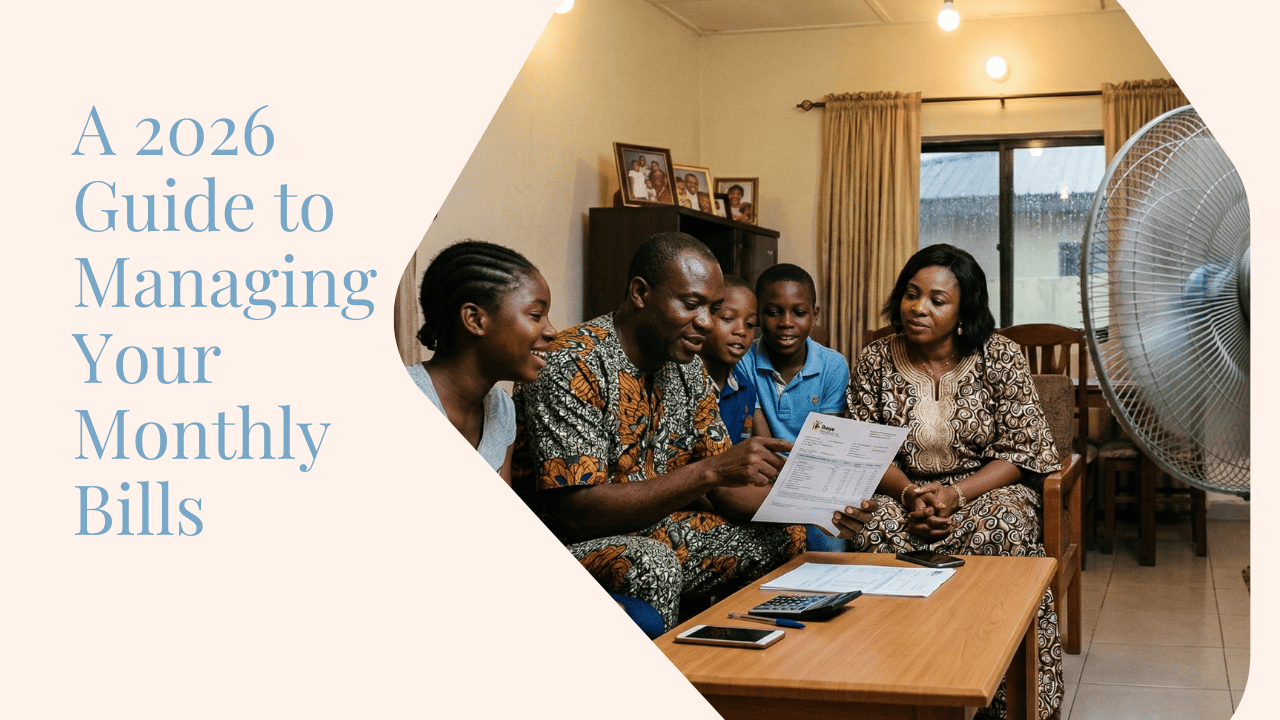
Before answering the question: how much is a unit of electricity in Nigeria? You need to understand the structure of the electricity market.
Nigeria’s power distribution falls under several Distribution Companies, known as DisCos. These companies supply electricity to different regions:
Each DisCo applies tariffs based on government regulations. However, your location determines your band and rate.
The Nigerian Electricity Regulatory Commission introduced a band system. Consequently, customers pay according to supply hours.
Naturally, Band A customers pay higher electricity tariffs. Meanwhile, Band D and E pay lower rates but receive fewer hours. In other words, your band directly affects your monthly electricity bill.
Now let's answer the big question: how much is a unit of electricity in Nigeria? The first question is: what does one unit mean? One unit of electricity equals one kilowatt-hour (kWh). In simple terms, if you use a 1,000-watt appliance for one hour, you consume one unit.
For example:
So, every appliance in your home contributes to your total monthly consumption.
As of 2026, tariffs vary by band. However, average rates are like this:
Therefore, if you consume 300 kWh in Band A at ₦220 per unit, your bill will be ₦66,000. So, anytime someone asks, how much is a unit of electricity in Nigeria, the correct answer depends on your band and DisCo.
I want to bring everything closer home in this section. A 3-bedroom apartment in Lagos or Abuja is the typical urban Nigerian family setup.
Below is an estimate of common home appliances and their monthly usage:
|
Appliance |
Average Daily Use |
Monthly Units |
|
Fridge |
24 hours cycling |
90 kWh |
|
3 Fans |
8 hours daily |
45 kWh |
|
10 Led Bulbs |
6 hours daily |
18 kWh |
|
Television |
6 hours daily |
30 kWh |
|
Washing Machine |
3 times weekly |
12 kWh |
|
Microwave |
15 minutes daily |
8 kWh |
Now let's calculate the bill.
You may think your usage is normal. However, hidden factors increase your bill without you knowing.
1. Phantom Loads: Many appliances consume power while switched off. Decoders, microwaves, and chargers drain energy. So, unplug devices not in use.
2. Old Wiring: Outdated wiring leaks power. Poor electrical installations also waste electricity. As a result, the meter runs faster than expected.
Now that you know how much is a unit of electricity in Nigeria, let's reduce your spending.
1. Switch to Energy-Efficient Appliances: Use inverter fridges; install LED bulbs, and go for energy-saving air conditioners. Although they cost more upfront, they reduce monthly bills significantly.
2. Change Daily Habits: Turn off unused lights; iron clothes in batches, and reduce air conditioner hours. Little habits lead to some significant savings.
3. Reduce Dependence on Grid Power with Solar: This is the real game changer. A solar energy system for home reduces grid consumption. Furthermore, a reliable solar power system provides stable electricity during outages. Many families are now installing a mini solar system for home to power lights, fans, and TVs. So, instead of worrying daily about tariffs, you create your own electricity.
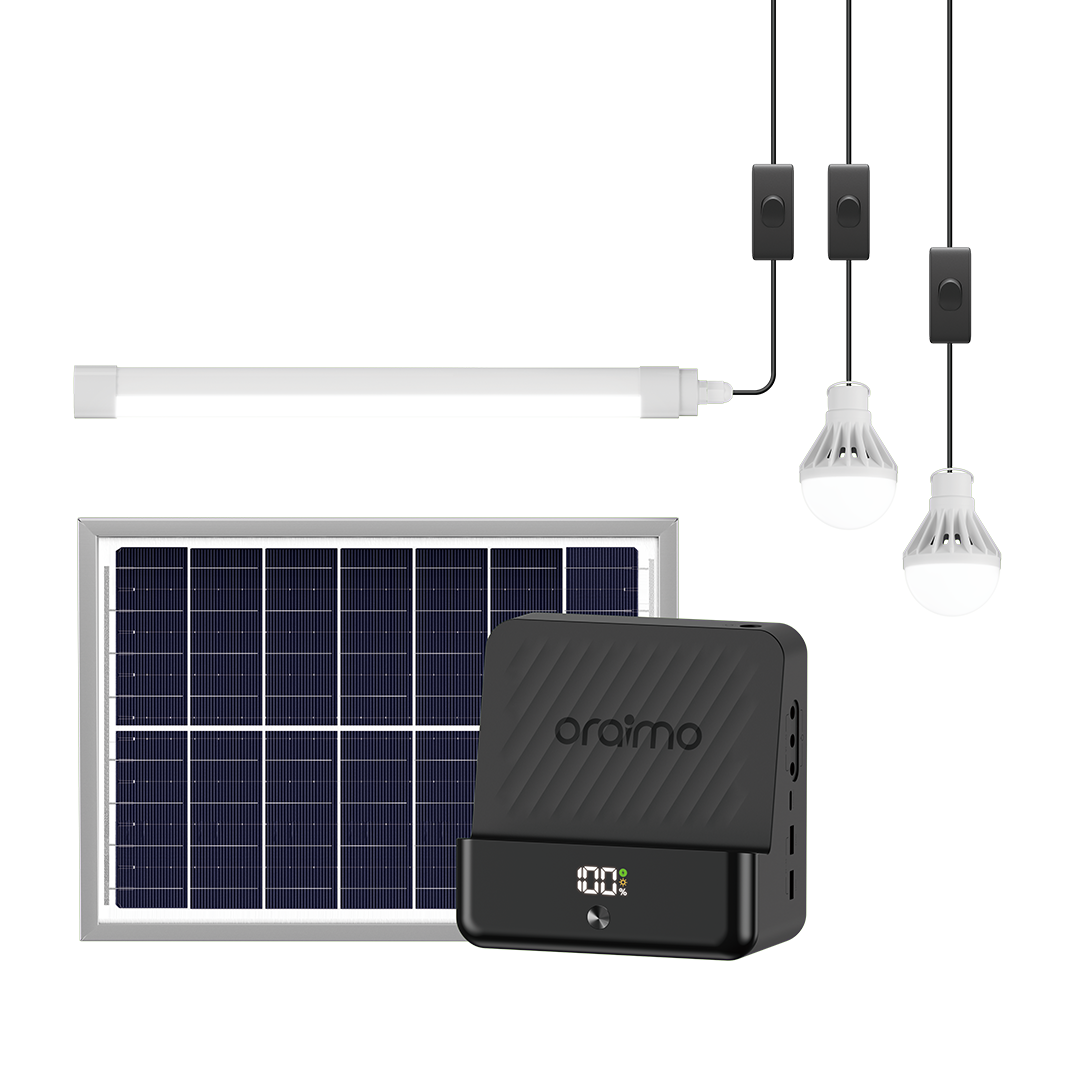
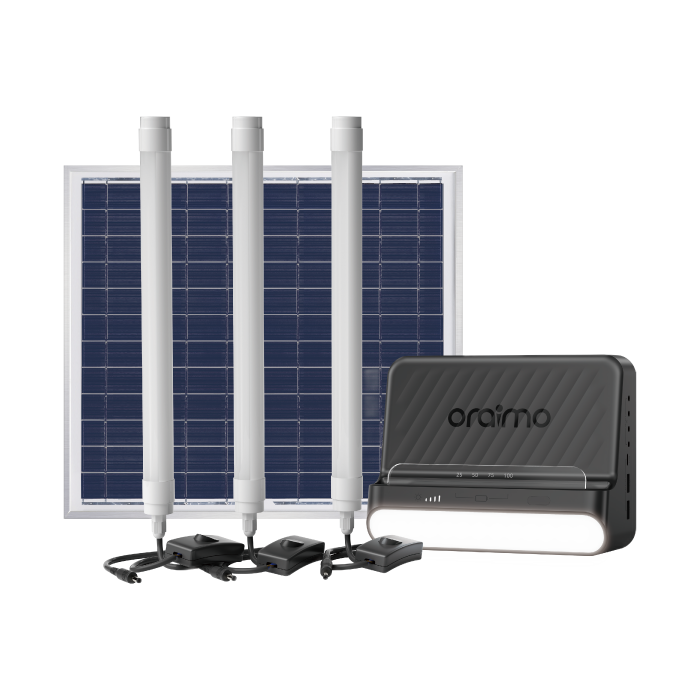
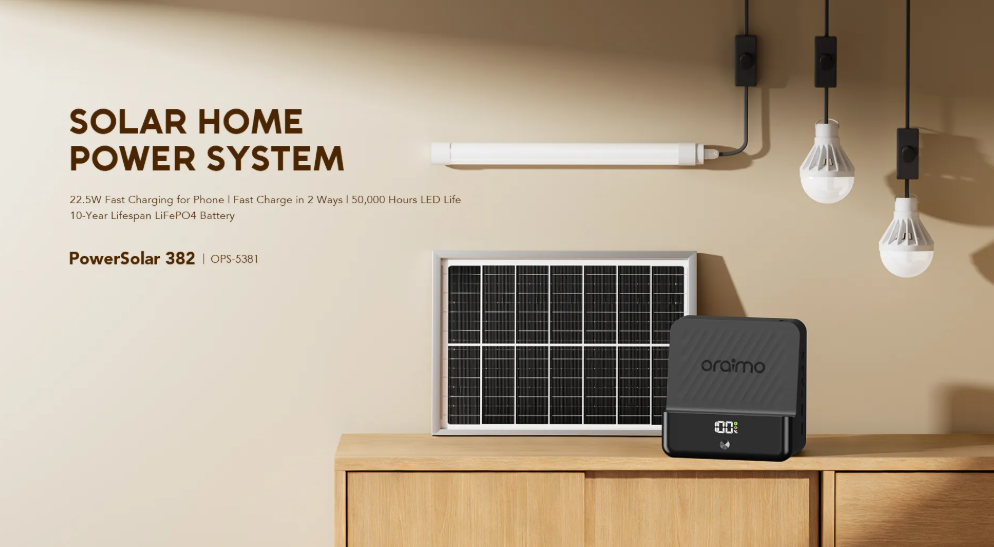
I have tested different solar solutions. However, I wanted something compact, reliable, and affordable. That led me to oraimo PowerSolar 382 (OPS-5381). I personally love how practical it is for typical Nigerian homes.
Key Features
It works perfectly as a backup solution.It can power your TV, router, fans, and lights. As a result, your monthly grid consumption dropped drastically. More so, the device charges efficiently with solar panels. So, it functions like a reliable solar power system without complex installation.
In addition, unlike noisy generators, this solution runs silently. Additionally, it requires no fuel. That alone saves you serious money monthly.
Electricity tariffs will likely keep increasing. So, waiting will not help. Instead, calculate your consumption; reduce waste, and pgrade your appliances. Most importantly, consider solar alternatives. A smart solar energy system for home protects you from unpredictable tariff hikes. Meanwhile, a mini solar system for home offers flexibility for smaller budgets.
For households looking for an easy way to get started, systems like the oraimo PowerSolar 382 (OPS-5381) provide a practical entry into home solar power. Designed for everyday household needs, it helps you reduce reliance on unstable grids while keeping essential devices running during outages. A solution like this can be a simple step toward more stable and predictable energy at home.