oraimo store
 4.8+
4.8+
4.8+
Download & Enjoy APP Exclusive Offers
4.8+

 Scan & Download oraimo store App






 Scan & Download oraimo store App
Scan & Download oraimo store App
Scan & Download oraimo store App
Scan & Download oraimo store App
Scan & Download oraimo store App
Scan & Download oraimo store App
Scan & Download oraimo store App
Scan & Download oraimo store App
Scan & Download oraimo store App
Nigeria is hot, with average daily temperatures consistently ranging between 25°C and 32°C all year round. In many states, the heat often climbs above 38°C, making life unbearable without a cooling system. Every Nigerian family needs a reliable way to stay cool during these heatwaves. Usually, the choice comes down to two popular options: a ceiling fan or a pedestal fan. But which one actually makes sense for your situation? Let us walk you through everything you need to know so you can make the right choice.
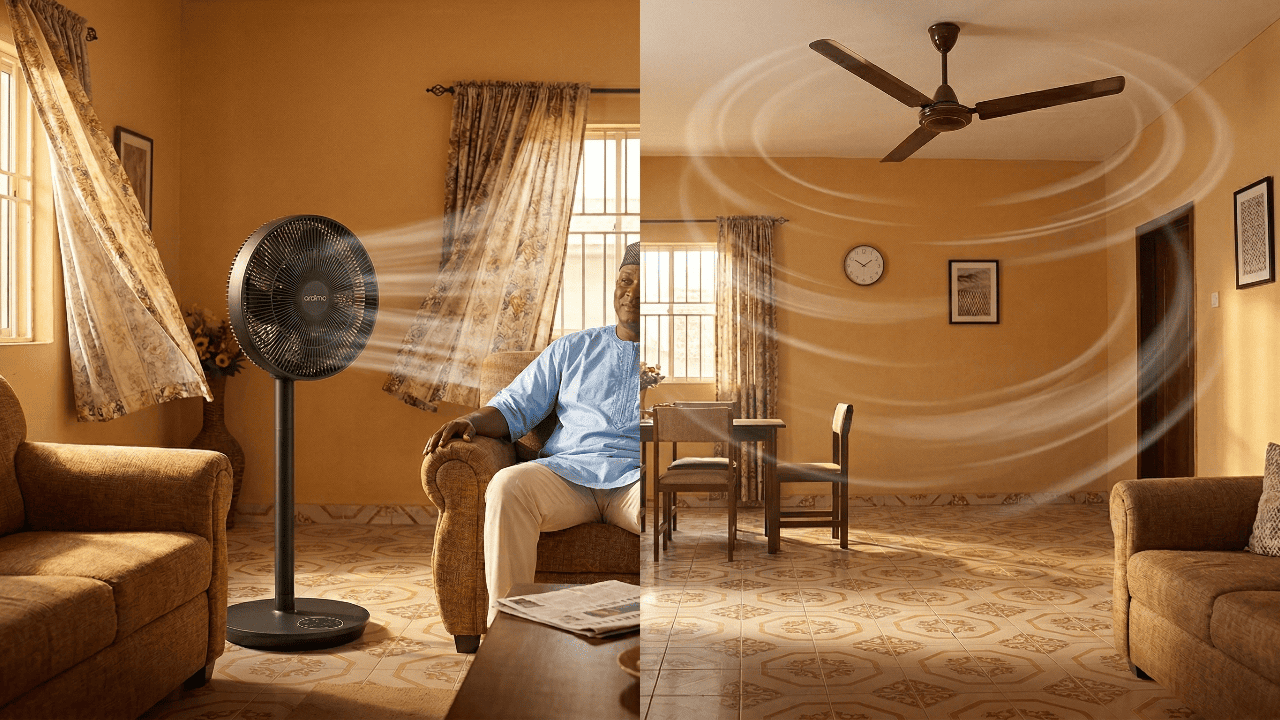
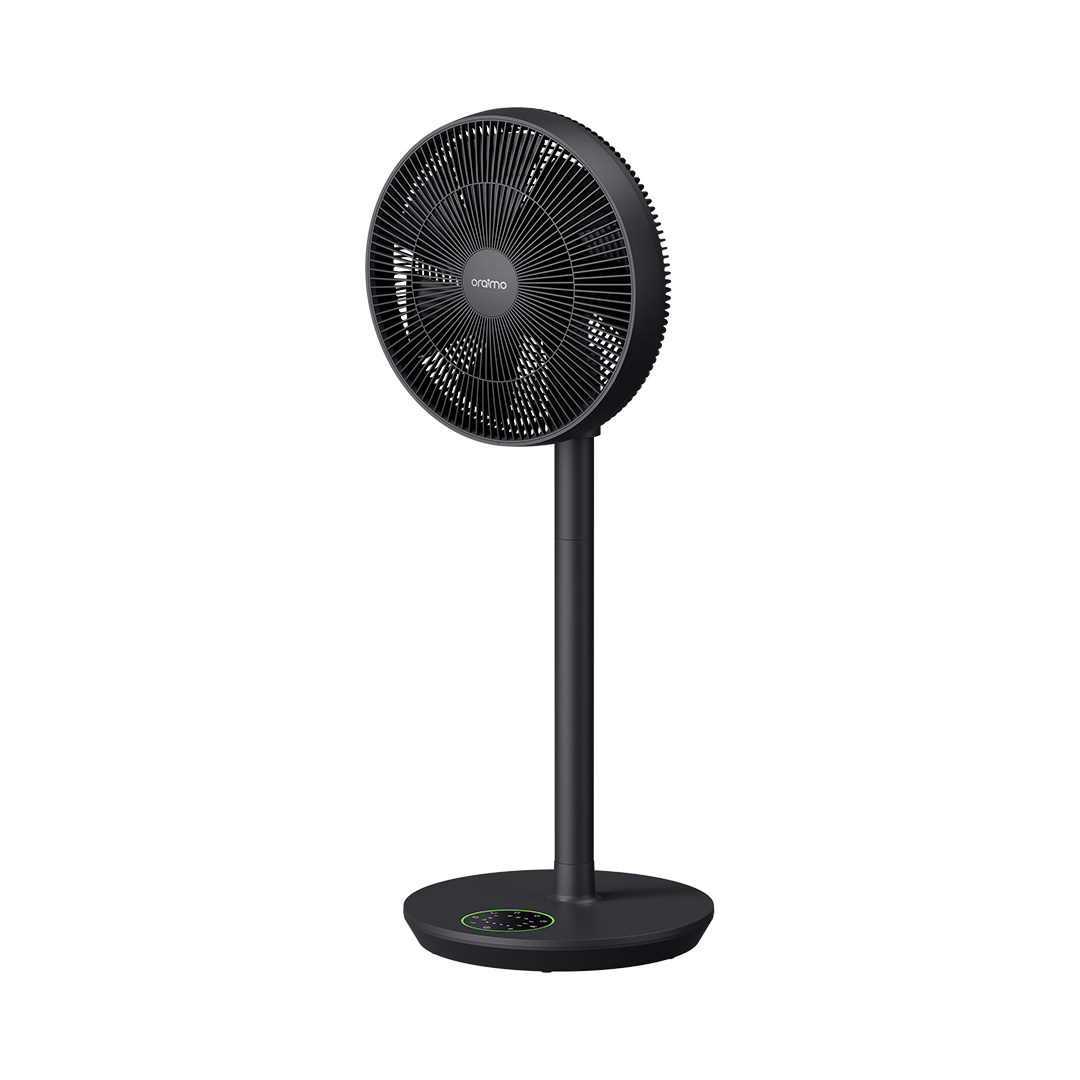
A pedestal fan — also known as a stand fan or standing fan — is a freestanding electric fan mounted on an adjustable pole with a wide base for stability. It works by drawing in warm air and pushing it forward using rotating blades, creating a cooling breeze across the room or in a specific direction.
In the Nigerian market, pedestal fans typically come in four common blade sizes:
The stand fan is incredibly versatile. You can use it in your bedroom, sitting room, office, shop, or even outside during a ceremony or owambe. Because it sits on a pole with a base, you can tilt the fan head up or down and direct the airflow exactly where you want it. Prices in Nigeria vary wildly based on the brand and features, ranging from ₦25,000 for basic models to over ₦90,000 for high-end rechargeable versions

A ceiling fan is an electric fan that is permanently fixed to the ceiling of a room. It works by spinning its blades to move air around the space. One thing many people don't know is that ceiling fans can spin in two directions: clockwise in harmattan or cool seasons (to push warm air trapped near the ceiling downward) and counterclockwise during the hot season (to create a direct downward breeze that cools the occupants below).
There are two common ceiling fan installation styles:
Ceiling fans work well in living rooms, large open halls, and bedrooms with high ceilings. They are a common feature in many Nigerian homes, especially in older buildings and government quarters.
Prices are generally affordable, often starting around ₦18,000, but you must factor in the cost of an electrician for installation. While they look neat and stay out of the way, they are permanent fixtures. Once you bolt it to the ceiling, it stays there.
When you are at the electronics market trying to decide, you need to weigh several factors. Let us break down how a pedestal fan stacks up against a ceiling fan across the following eight key categories.
A ceiling fan distributes air across a wider area of a room. Because it spins overhead, the airflow spreads evenly in all directions below it. A pedestal fan, on the other hand, delivers a more focused, direct blast of air. If you want to feel cool immediately — especially on a hot afternoon — the pedestal fan wins. If you want general air circulation across a room, the ceiling fan does the job.
Energy use is a big deal in Nigeria, especially with the cost of energy. Understanding stand fan wattage can help you manage consumption. A typical ceiling fan uses between 50W and 80W of power. A standard pedestal fan uses between 45W and 75W, depending on size and speed. The two are fairly comparable in terms of electricity consumption at similar sizes. However, modern rechargeable standing fans with brushless motors (like some oraimo models) use significantly less power — as low as 35W — which is a meaningful saving over time.
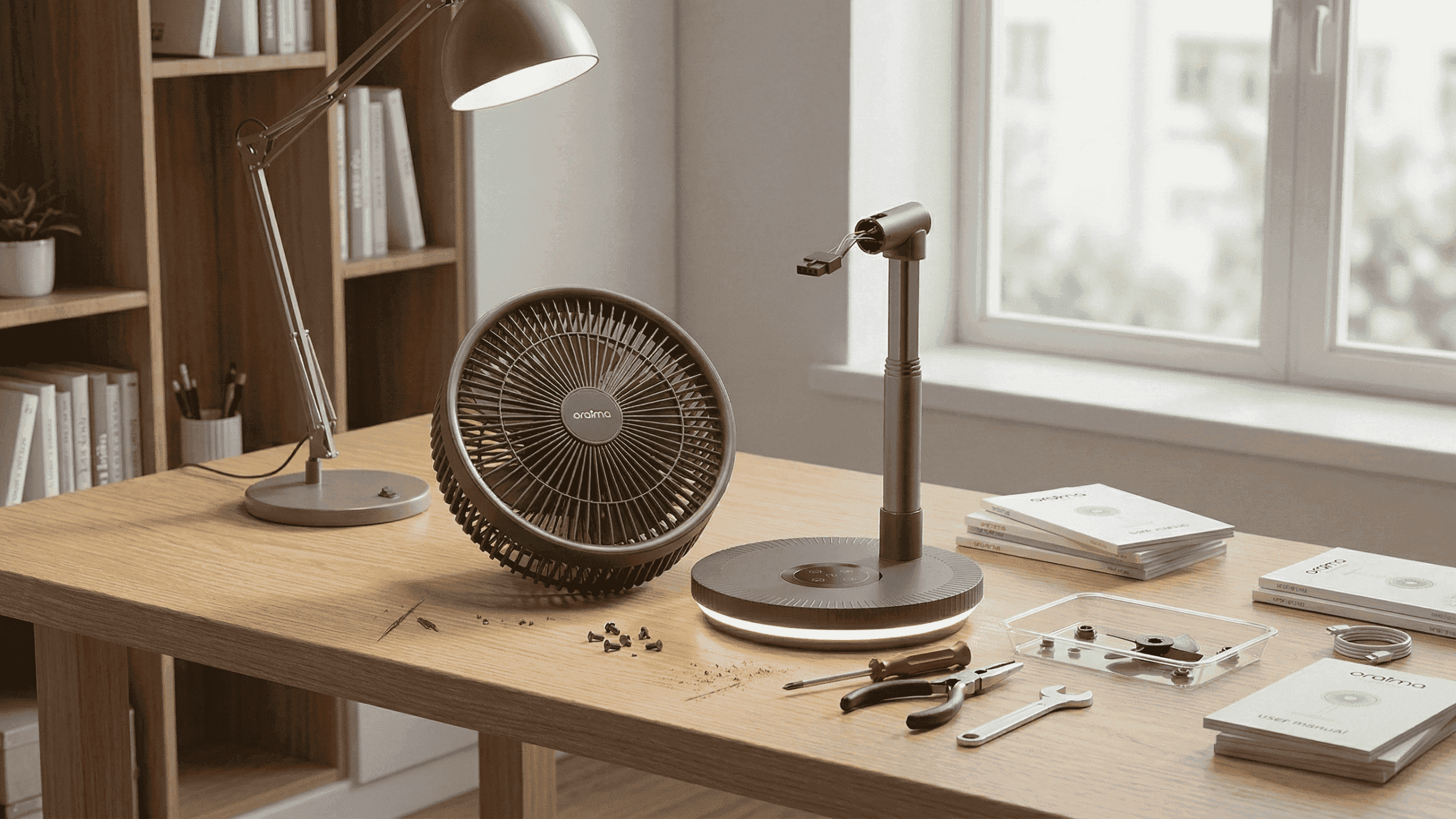
This is a clear win for the pedestal fan. There is nothing to install. You unbox it, assemble the base and pole in minutes, and you are ready to go. A ceiling fan, on the other hand, requires drilling into your ceiling, electrical wiring, and a proper mount. You will need an electrician. If you are renting, your landlord may not even allow it.
A pedestal fan is easy to move from room to room, carry to the backyard, or take to a new house when you move. A ceiling fan is fixed in place. Once it is installed, that is where it stays. For Nigerians who change apartments frequently, portability is a serious advantage for the stand fan.
Both fan types can generate noise at high speeds. However, ceiling fans tend to produce a constant low hum. Pedestal fans with older induction motors can be noticeably louder, especially at high speed. The newer brushless motor pedestal fans are much quieter — making them a better option for bedrooms and quiet workspaces.
Ceiling fans have a clean, built-in look. They do not take up floor space and can even enhance the appearance of a room when well-chosen. A pedestal fan is functional but more visible and can feel bulky in a small or well-decorated room.
A ceiling fan requires occasional cleaning, especially the blades and the motor housing. Because it is fixed overhead, cleaning can be awkward. A pedestal fan is easier to wipe down and maintain because you can reach all its parts without a ladder.
When you factor in both the purchase price and installation cost, a ceiling fan is not always the cheaper option. A good standing fan can cost the same or even less, with zero installation fees. For anyone working with a tight budget, the pedestal fan is the more cost-effective entry point.
No honest comparison of fans in Nigeria is complete without talking about power supply. NEPA remains unpredictable. Load shedding, feeder faults, and prolonged outages are everyday realities across cities and towns.
When light goes, a ceiling fan becomes completely useless. It is permanently wired to the mains and has no backup option. You either run your generator or you suffer. And running a generator just to power a ceiling fan is expensive and frankly impractical in the middle of the night.
This is exactly why rechargeable fans have become so popular in Nigeria. A rechargeable fan or rechargeable standing fan charges up when power is available and continues to run on its battery during outages. No generator noise, no fuel cost, no sweating through the night. For millions of Nigerian households, this is not just a convenience — it is the most practical cooling solution available.
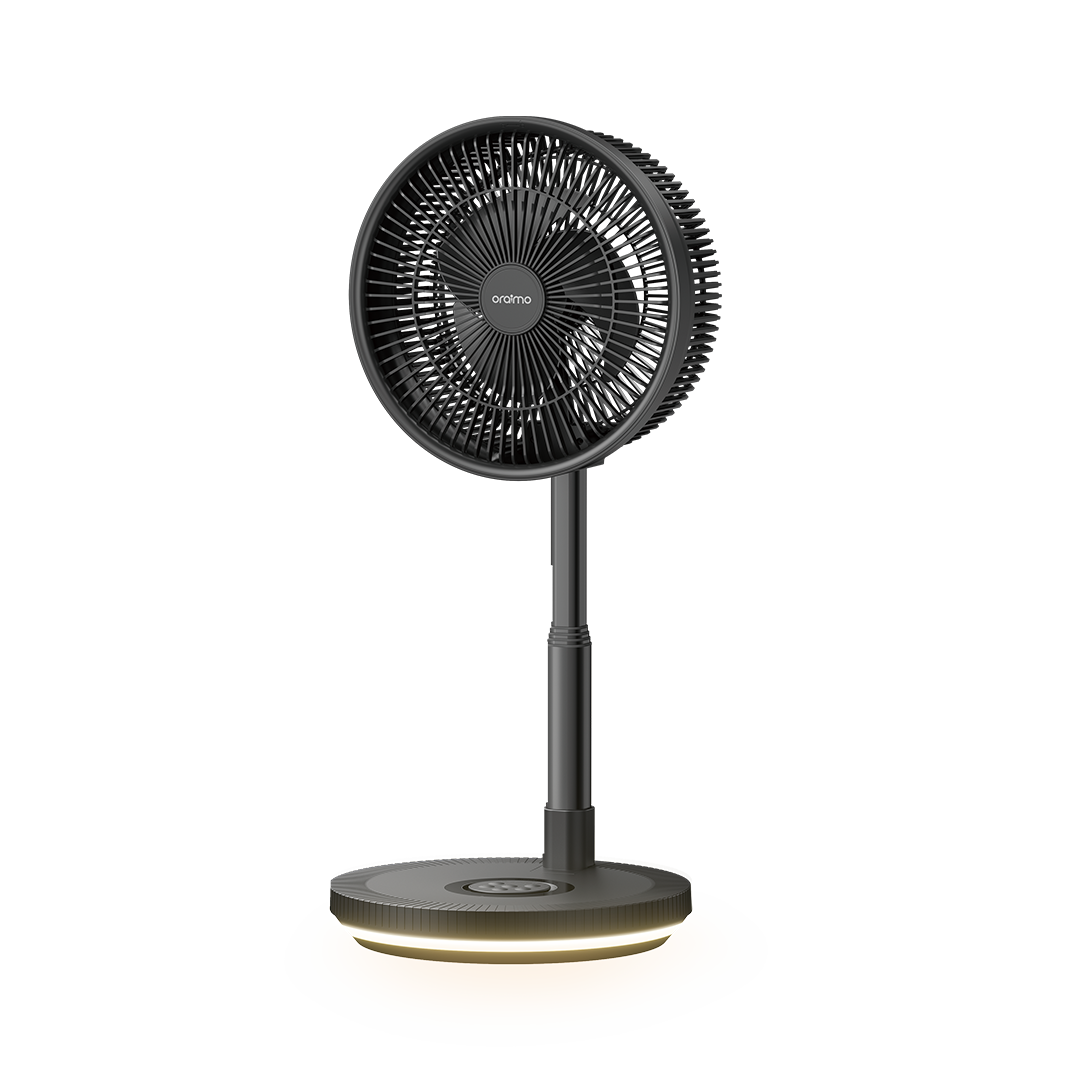
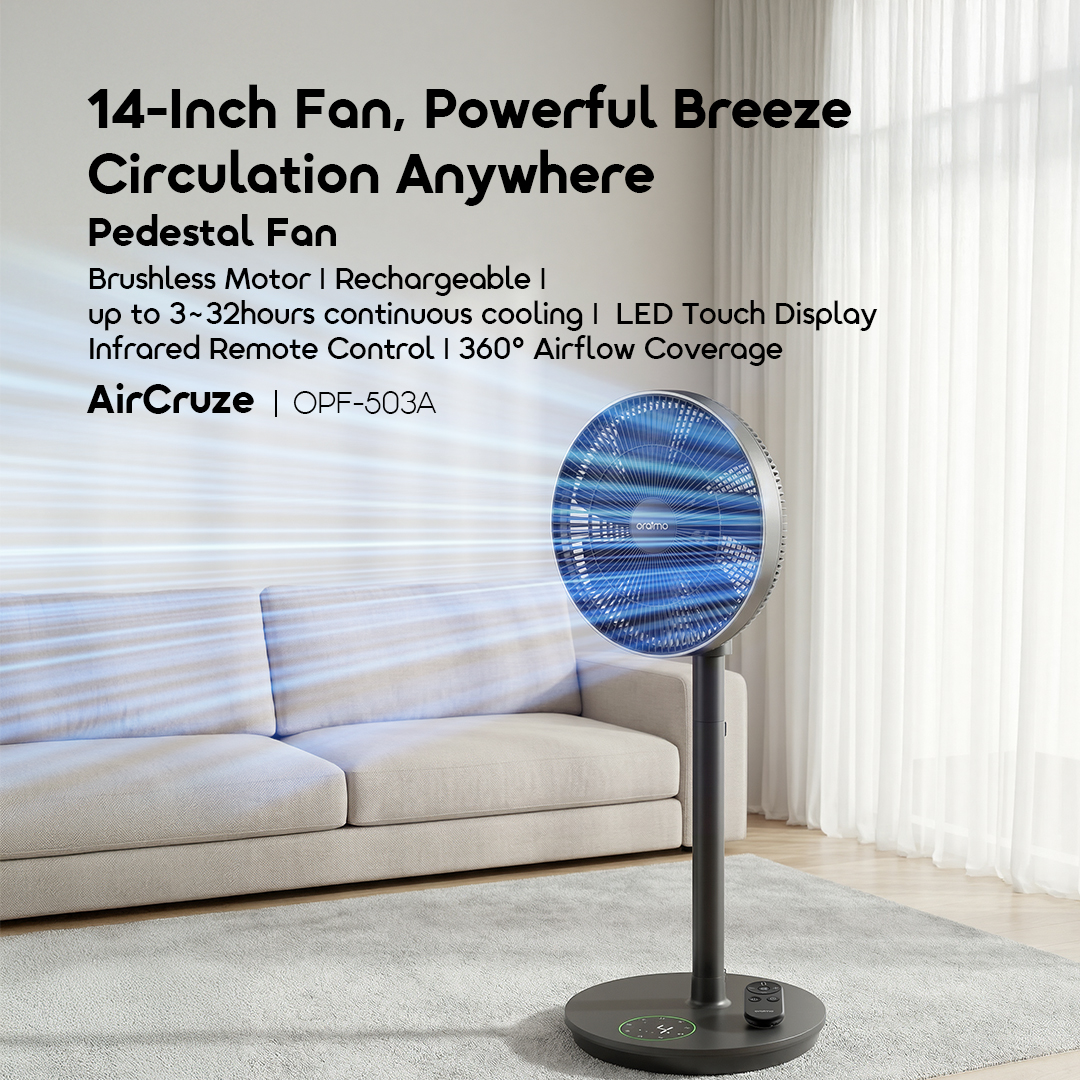
At oraimo, we designed the AirCruze OPF-503A specifically with the Nigerian lifestyle in mind. This is not just a pedestal fan — it is a rechargeable standing fan that works whether NEPA is in your life or not.
Here is what makes it stand out:
This rechargeable pedestal fan is a great fit for:
Choosing between a ceiling fan and a pedestal fan depends on your priorities. If you want permanent, wide-area coverage and have constant power (or a massive inverter), a ceiling fan is fine. But for the average Nigerian who wants flexibility, easy maintenance, and protection against power outages, the pedestal fan is the clear winner.
Specifically, a rechargeable standing fan offers the peace of mind that no ceiling fan can provide. We invite you to experience the “Cooler Life” with oraimo. Don’t let the Nigerian heat or inconsistent power supply dictate your comfort. Switch to a smarter way of staying cool today.